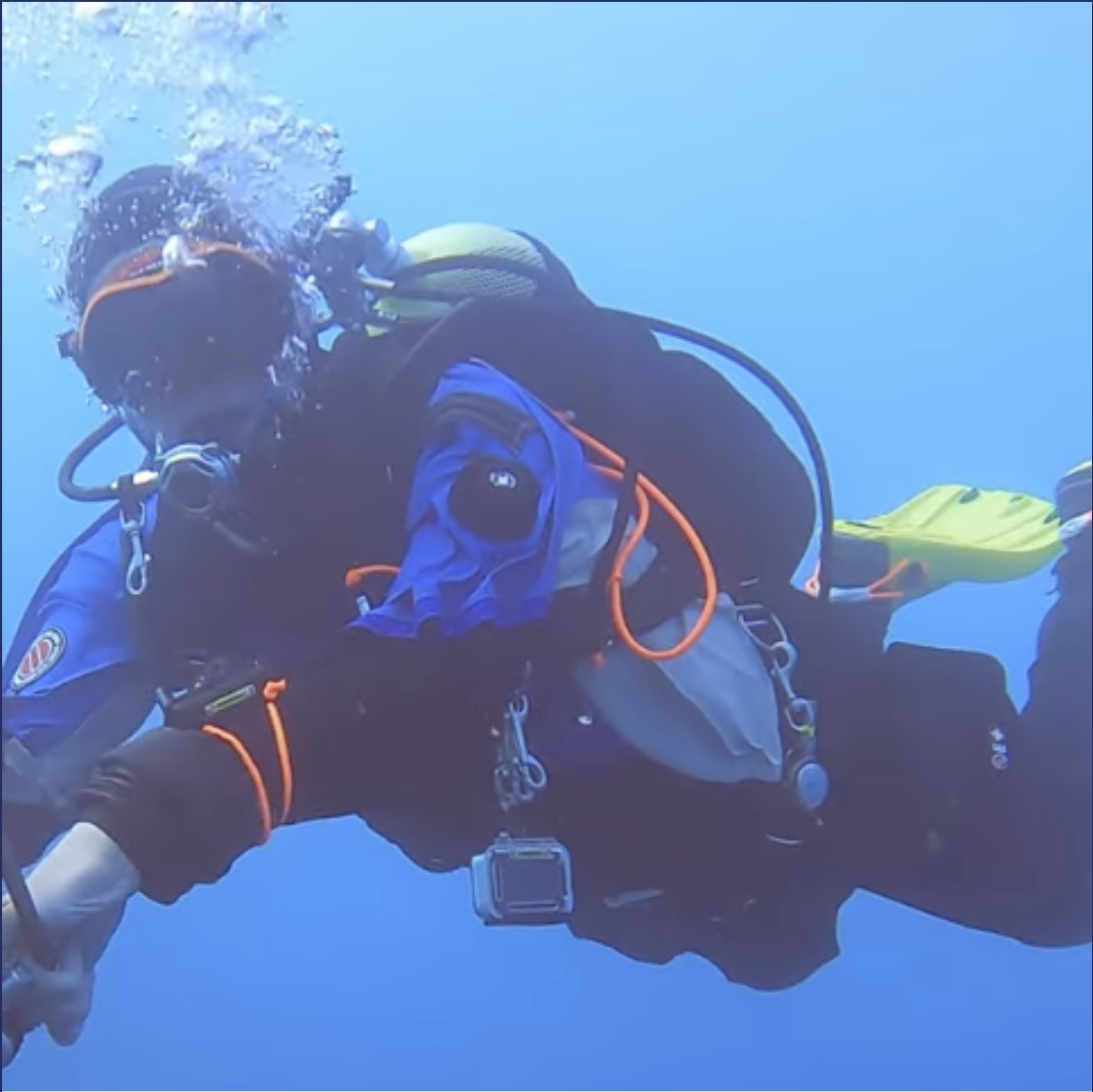
SDI Bouancy Speciality
3.900 kr. 3.900 kr.
Advanced Bouancy Speciality
Du kommer til at arbejde med at ligge perfekt i vandet, træne finne teknik, spare energi og få helt styr på dit udstyr.
SDI Advanced Buoyancy Control
Du kommer til at arbejde med at ligge perfekt i vandet, spare energi og få helt styr på dit udstyr.
Vi arbejder også med finneteknik og hvordan du kan løse opgaver svævende uden at røre bunden, stige eller falde.
Kurset foregår over to dage. Der er eLearning, teori og tre dyk
SDI Advanced Buoyancy Control Standards
Introduction
Introducing a diver to the benefits of controlling his buoyancy usually has a great positive effect, an effect that will enhance the diver’s sense of enjoyment and feeling of accomplishment. This specialty is designed to increase the open water diver’s understanding of the factors that influence his buoyancy, and to train the diver in using those means available to him as methods for controlling his buoyancy. The added benefits to the marine, and freshwater environments, cannot be overstated; as well as a diver that has better control of himself in conjunction with his environment.
Who May Teach
An active SDI Instructor or Assistant Instructor that has been certified to teach this specialty.
Student to Instructor Ratio
Academic:
- Unlimited, so long as adequate facilities, supplies and time are provided to ensure comprehensive and complete training of subject matter.
Confined Water (swimming pool-like conditions):
- A maximum of 10 students per instructor.
- Instructors have the option of adding 2 more students with the assistance of an active Assistant Instructor or Divemaster.
- The total number of students an instructor may have in the water is 14 with the assistance of 2 active Assistant Instructors or Divemasters.
Open Water (ocean, lake, quarry, spring, river, or estuary):
- A maximum of 8 students per instructor; it is the instructor’s discretion to reduce this number as conditions dictate.
- The instructor has the option of adding 2 more students with the assistance of an active Assistant Instructor or Divemaster.
- The total number of students an instructor may have in the water is 12 with the assistance of 2 active Assistant Instructors or Divemasters.
Student Prerequisites
- SDI Open Water Scuba Diver, SDI Junior Open Water Scuba Diver, or equivalent.
- Minimum age 18, 10 with parental consent.
Course Structure and Duration
- Confined or open water execution.
- Two dives are required with a complete brief and debrief by the instructor.
Administrative Requirements
Administrative Tasks:
- Collect the course fees from all the students.
- Ensure that the students have the required equipment.
- Communicate the schedule to the students.
- Have the students complete the:
- SDI Liability Release and Express Assumption of Risk Form
- SDI Medical Statement
Upon successful completion of the course the instructor must:
- Issue the appropriate SDI certification by submitting the SDI Diver Registration Form to SDI Headquarters or registering the students online through member’s area of the SDI website.
Required Equipment
Basic open water scuba equipment as described in section three of this manual.
Approved Outline
Instructors may use any additional text or materials that they feel help present these topics. The following topics must be covered:
- Why Do We Care About Buoyancy?
- Don’t touch the aquatic life; save the environment.
- Less fatigue, less effort required; more fun.
- Reducing air consumption = more bottom time.
- Able to control buoyancy = better pictures or video.
- When Must a Buoyancy Check Be Performed?
- When equipment is changed.
- When diving environment is changed.
- Have not been diving for a while.
- During every dive.
- Buoyancy Factors:
- Additional equipment; Photo, video, extra cylinder, extra equipment, dive lights, etc.
- Cylinder weight changes during a dive, as air is consumed from the cylinder; depending on cylinder size; 9.0 litre/63 cu ft approximately 1.35 kg/3 lbs or an 11.1 litre/80 cu ft cylinder approximately 1.52 kg/5 lbs.
- Using lungs versus BCD. When using the lungs to compensate, be aware of not holding one’s breath and paying attention to how much depth changes that is made, to avoid lung embolism.
- Using BCD versus dry suit.
- Staying physically fit.
- Breathing patterns and technique:
- Do not – breathe shallow. ii. Do not – hold your breath.
iii. Do – slow down your breathing rate. iv. Do – stay relaxed – go slow.
- Strenuous work and stress increases breathing rate.
- Compression of suit due to water pressure changes the buoyancy of the suit.
- Weights – position and distribution and what impact that may have:
- Horizontally, face down – weights towards sides and stomach. ii. Head-up, Feet-down – weight toward middle of stomach.
- Slightly head-up, Feet-down – weight toward chest or move cylinder.
- Feet rising – use light ankle weights, especially if wearing a dry suit.
- Weight integrated systems – benefits and restrictions.
- Streamlining equipment:
- Minimize drag.
- Keeping equipment off the bottom.
- Streamlining body (body positions):
- Overweight drags down lower half of body.
- Using BCD to compensate, will float upper part of body.
- Efficient kicking style:
- Practicing your skills.
- Weighting (salt water, use as initial guideline only – do a buoyancy check to confirm)
- Swimsuit –45 kg/1 lbs to 1.2 kg/4 lbs. ii. 3 mm wet suit – 5 percent body weight. iii. 5 mm wet suit – 10 percent of body weight.
- Cold-water suit with hood – 10 percent of body weight, plus 1 to2.5 kg/3 to 5 lbs.
- Dry suit – 10 percent of body weight, plus 3 to 4.5 kg/7 to 10 lbs.
- How to perform a standard buoyancy check, with an almost empty cylinder:
- Wear all equipment and normal amount of weight.
- Enter water to deep to stand in. iii. Deflate BCD completely.
- Hang vertical and motionless, breathe in, and hold a normal breath at the surface.
- Adjust weight until floating at eye level. vi. Exhale – must sink slowly.
Required Skill Performance and Graduation Requirements
Dives can either be performed in a pool or in open water. Students are required to successfully complete the following:
- Dive 1:
- Assembling dive equipment; use an almost empty cylinder, approximately 34 bar/500 psi in the cylinder.
- Pre-dive check and enter water to deep to stand in.
- Perform a pre-dive buoyancy check with an almost empty cylinder.
- Adjust weight to achieve correct buoyancy:
- Step 1: student takes a 1 kg/2 lbs weight off, to illustrate underweight.
- Step 2: student adds 2 kgs/4 lbs of weight, to illustrate overweight.
- Step 3: student removes 1 kg/2 lbs of weight off, to achieve neutral buoyancy.
- Change cylinder and use a full cylinder.
- Do a pre-dive buoyancy check with full cylinder.
- Controlled descent.
- Hovering exercises:
- Hover stationary without use of hands or fins.
- Fine-tune with breath control. iii. Fine-tune with BCD or dry suit. iv. Close to bottom exercises, no touch.
- Perform skills from the Open Water course, as directed by the instructor, while neutrally buoyant.
- Swimming exercises.
- Ascent that includes a safety stop hovering; simulate safety stop if in pool.
- Log dive, noting the amount of weight used.
- Dive 2
- Change to a full cylinder.
- Do a pre-dive buoyancy check with the full cylinder.
- Controlled descent.
- Hovering exercises:
- Fine-tune with breath control.
- Fine-tune with BCD or dry suit.
- Close to bottom exercises, no touch.