TDI Intro to tech
5.900 kr.
Når du vil igang med teknisk dykning,
så er det startkurset for dig.
Alt det grundlæggendene Tech teori og teknik
Kurset indeholder dykkeplanlægning, avanceret bouancy kontrol, luftberegninger, teamtræning, opsætning af forskellige udstyrskonfigurationer og gennemgang af scenarier.
Teori og opsætning – cirka seks timer
Dykkedag 1 Open Water, to dyk
Dykkedag 2 Open Water, Et langt eller to kortere dyk
For at tilmelde dig kurset skal du være mindst 18 år.
Minimums krav til dig:
- For at tilmelde dig kurset skal du være mindst 18 år
- Minimum Open Water Scuba Diver-certifikat
- 50 loggede dyk
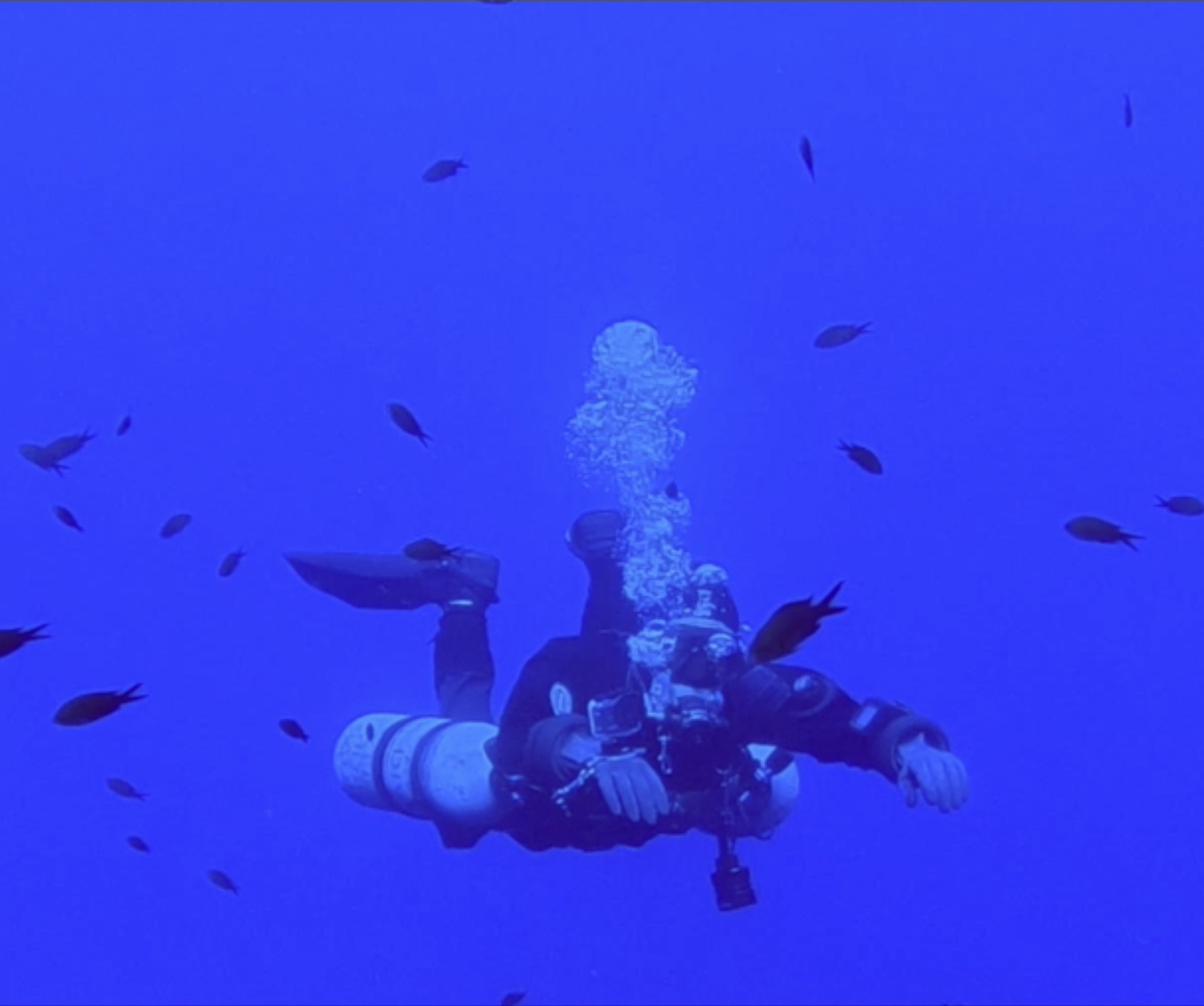
- Dit eget komplette udstyr. Flaske konfigurationer kan være: Double Sidemount, Single backmount med stageflaske eller dobbeltsæt.
Hvis du ikke har kompletudstyr, kan du muligvis leje af mig.
TDI Intro to Tech training standards, uddrag:
Introduction
The TDI Intro to Tech course introduces students to the world of technical diving. This course is designed as an introductory course to the TDI Advanced Nitrox course and the TDI Decompression Procedures Course.
The objective of this course is to familiarize students with technical equipment configurations, to enhance open water diving skills (such as buoyancy, trim, and situational awareness), and to introduce students to advanced gas planning techniques within a no-decompression context.
This course is strictly a nodecompression course; students are permitted to use enriched air nitrox (EAN) mixes, provided the gas mix is within their current level of certification.
Required Subject Areas
The following topics must be covered during the course:
- Physics:
- Pressure review.
- Physiology:
- Ascent/descent rates.
- Hypertermia – (varme)
- Hypotermia – (kulde)
- Psychological aspects.
- Equipment Considerations:
- Single/double cylinder(s); valve options.
- Regulator options.
- Harness/BCD options.
- Computer, bottom timer, depth gauge options.
- Reels/spools options.
- Lift bag/surface marker bag options.
- Exposure protection options.
- Minimum equipment, bring only what is needed.
- Streamlining and stowing equipment.
- Dive Planning:
- Tables/computer dive planning and execution.
- Surface air consumption (SAC) rate calculations.
- Minimum gas reserve calculations for no-decompression dives.
- Environmental considerations.
- Procedures:
- Entry/exit strategies.
- Emergency strategies in case of gas failure/loss.
- Ascent/descent strategies.
Required Skill Performance and Graduation Requirements
Students are required to successfully complete the following skills:
Land drills:
- Selection and preparation of equipment.
- Conduct team-oriented skills (buddy checks) for lift bag deployment.
- Gas matching among buddy teams.
- Demonstrate familiarity with basic hand signals.
- Demonstrate adequate pre-dive planning with limits based on the team and personal gas consumption.
Pre-dive drills:
- Use S.T.A.R.T. before every dive.
- Stress analysis and mitigation.
* START is S-drill (OOA drill and Bubble Check), Team (buddy equipment checks), Air (gas matching), Route (entry/exit and planned path underwater), Tables (depth, duration, waypoints, and schedule).
In-water drills:
- Weight check.
- Demonstrate adequate buoyancy control (ability to hover at fixed position in water column without moving hands or Feet).
- Demonstrate adequate trim (ability to maintain horizontal during the descent, bottom and ascent portion of the dive).
- Demonstrate no-silting propulsion techniques: frog kick, modified frog kick, modified flutter kick, backwards kick.
- Demonstrate the ability to perform the following exercises while maintaining trim and buoyancy in the water column:
- Regulator exchange.
- Regulator recovery.
- Mask partial flood and clear with minimal air loss.
- Mask removal and clear with minimal air loss
- Demonstrate the ability to perform a safety drill (S-drill) while maintaining trim and buoyancy in the water column.
- Demonstrate the ability to perform a valve drill while maintaining trim and buoyancy in the water column (if double cylinders are being used).
- Demonstrate the ability to deploy a surface marker buoy or lift bag while maintaining trim and buoyancy in the water column.
- Show good situational awareness.
Qualifications of Graduates
Upon successful completion of the course, graduates may engage in diving activities in a technical equipment configuration without direct supervision provided:
- The diving activities approximate those of training.
- The areas of activities and environmental conditions approximate those of training.
- Graduates may enroll in:
- TDI Advanced Nitrox Course.
- TDI Decompression Procedures Course.
Who May Teach
- Procedure One:
A current and active status SDI Open Water Scuba Diver Instructor or TDI Nitrox Instructor who has completed a TDI Intro to Tech Instructor course conducted by a TDI Intro to Tech IT may be registered to teach.
- Procedure Two:
An active status SDI Open Water Scuba Diver Instructor or TDI Nitrox Instructor who holds the ratings of TDI Advanced Nitrox and Decompression Procedures Diver certifications, or equivalent, may apply for an administrative upgrade to teach.
Student to Instructor Ratio
Academic:
- Unlimited, so long as adequate facility, supplies and time are provided to ensure comprehensive and complete training of subject matter.
Confined Water (swimming pool-like conditions):
- N/A.
Open Water (ocean, lake, quarry, spring, river, or estuary):
- A maximum of 6 students per instructor; it is the instructor’s discretion to further reduce this number as conditions dictate.
Student Prerequisites
- Minimum age 18,
- Minimum certification an SDI Open Water Scuba Diver or equivalent.
- Provide proof of 25 logged open water dives.
Course Structure and Duration
Open Water Execution:
- A minimum of 3 dives must be conducted; All dives must be conducted at depths within the diver’s current level of certification, but no dives should exceed 23 Metres/75 Feet.
Course Structure:
- TDI allows instructors to structure courses according to the number of students participating and their skill level.
Duration:
- The minimum number of in classroom and briefing hours is 6.
Training Material
Required material:
- TDI Intro to Tech Manual and Knowledge Quest or eLearning.
- TDI Intro to Tech Instructor Guide.
Optional material:
- TDI Advanced Nitrox Diving Manual TDI Decompression Procedures Manual TDI Intro to Tech PowerPoint Presentation.
- TDI Intro to Tech Digital Instructor Resource.
- TDI Intro to Tech Cue
- TDI Intro to Tech Evaluation
Required Equipment
The following equipment is required for this course:
- Primary cylinder(s) cylinder volume appropriate for diving conditions and diver gas consumption.
- Primary regulators:
- Primary and alternate second stage required on all primary cylinder(s).
- Submersible pressure gauges are required on all primary cylinder(s).
- Depth gauge and automatic bottom timer and/or dive computer.
- Buoyancy compensator device appropriate for equipment configuration.
- Ascent reel with lift bag/surface marker buoy:
- Appropriate for maximum planned depth.
- Surface marker buoy with adequate lift and size for the dive environment.
- Exposure protection appropriate for local diving conditions.
- Slates/wet-notes.
In order to complete this course, students must:
- Complete all open water requirements safely and efficiently.
- Demonstrate mature, sound judgment concerning dive planning and execution.